

From choosing the wrong transport pass to underestimating mountain weather, these practical tips will help you plan a smoother, smarter, and more memorable Swiss adventure.
Switzerland has a way of making every photo look effortless.
Crystal-clear lakes, charming villages, snow-capped peaks, scenic train journeys, and picture-perfect streets often give the impression that you can simply arrive, hop on a train, and let the country do the rest and to be fair, Switzerland is one of the easiest countries in Europe to explore.
But here’s what many travellers don’t realise: the difference between a good trip and an unforgettable one often comes down to planning.
Every year, visitors spend more than they need to, rush through destinations, buy transport passes they barely use, or miss out on incredible experiences simply because they didn’t know what to expect. Unlike many destinations where you can leave most decisions until the last minute, Switzerland rewards travellers who do a little homework beforehand. Understanding how the transport system works, choosing the right season, building a realistic itinerary, and knowing where to invest your budget can completely transform your experience.
The good news? None of these mistakes are difficult to avoid.
Whether you’re visiting for the first time or returning to explore a new region, these are the ten things experienced travellers wish they had known before planning their Switzerland adventure.
Let’s start with the biggest one.
Why Switzerland Requires a Different Kind of Travel Planning
One of the biggest misconceptions about Switzerland is that it’s “small enough to see in a few days.”
Technically, you can travel from one end of the country to the other in just a few hours. But travelling through Switzerland and truly experiencing Switzerland are two very different things.
Every region has its own personality.
Beyond Switzerland’s famous cities and mountain resorts lies a completely different side of the country. You could spend a morning wandering through the flower trails of Allmendhubel, discover the colourful lakeside village of Gandria, enjoy the peaceful waterfalls of Faido, or slow down in Lavaux, where vineyard terraces overlook Lake Geneva. These places may not always appear in every travel guide, but they often become the experiences travellers remember most.
That’s why planning your route around the kind of experience you want, rather than simply ticking off famous destinations, can completely change the way you experience Switzerland.
Trying to fit all of these into a week often leads to more time spent checking train schedules than actually enjoying the places you’ve travelled so far to see.

Source: HolidayMonk
Planning also matters because Switzerland’s transport network is unlike almost anywhere else. There are different travel passes, regional discounts, mountain railways, cable cars, panoramic trains, and seasonal schedules. Choosing the right combination can save both time and money, while choosing the wrong one can leave you paying for benefits you never use.
The same goes for the weather. A warm morning in Zurich can quickly turn into a chilly afternoon at Jungfraujoch. Packing smartly, checking reliable forecasts on MeteoSwiss, and staying flexible with outdoor plans can make all the difference.
Fortunately, with a little preparation, Switzerland becomes one of the most rewarding countries to explore.
Here are ten common mistakes that are surprisingly easy to avoid.
Mistake #1: Trying to See All of Switzerland in One Trip
It’s understandable.
You open a map, search “best places in Switzerland,” and suddenly your itinerary looks something like this:
Zurich → Lucerne → Interlaken → Grindelwald → Lauterbrunnen → Zermatt → Montreux → Geneva
All within six or seven days.
On paper, it seems possible. In reality, it usually becomes exhausting.
One of the biggest mistakes visitors make is confusing travel time with sightseeing time. While Switzerland’s train network is incredibly efficient, every transfer, hotel check-in, luggage move, and early departure eats into the hours you could be spending actually enjoying your destination.

Source: National Geography

Source: Switzerland Tourism

Source: Wikipedia
Instead of collecting destinations like a checklist, think about the type of holiday you want.
If you’re chasing alpine scenery, focus on the Bernese Oberland region with places like Interlaken, Grindelwald, and Lauterbrunnen. If culture and lakeside cities are more your style, combine Zurich, Lucerne, and perhaps a visit to Lugano or Geneva.
Travelling slower doesn’t mean seeing less. It often means experiencing far more.
Give yourself time to enjoy a quiet morning by the lake, take an unplanned hike, discover a local café, or simply sit on a panoramic train without worrying about your next connection.
Some of the best memories in Switzerland aren’t created by rushing between famous attractions. They’re created when you give yourself enough time to appreciate where you already are.
Planning Tip: Instead of asking, “How many places can I visit?” ask yourself, “How much time do I want to spend in each place?” Your itinerary will instantly become more enjoyable.
Mistake #2: Choosing the Wrong Season for Your Trip
One of the most common questions travellers ask is:
“When is the best time to visit Switzerland?”
The better question is:
“What kind of Switzerland do I want to experience?”
Many travellers book flights based on social media photos without realising that every season offers something completely different.
Dreaming of hiking through alpine meadows, cruising across turquoise lakes, and taking scenic mountain walks? Summer might be your perfect season, looking forward to skiing, Christmas markets, festive villages, and snow-covered landscapes? Winter is hard to beat.

Would you rather avoid the biggest crowds while still enjoying pleasant weather? Late spring and early autumn often offer an excellent balance between beautiful scenery and fewer tourists.
The mistake isn’t choosing the “wrong” season. It’s expecting every season to offer the same experience.
For example, some hiking trails and mountain activities may still be closed during spring due to lingering snow, while certain panoramic train routes become especially popular during summer holidays. Winter transforms many mountain towns into ski destinations, but it can also mean shorter daylight hours and different opening schedules.
Before booking flights, spend a few minutes exploring the official Switzerland Tourism website [LINK] to understand what each region offers throughout the year.
Matching your itinerary with the season is one of the simplest ways to make your trip feel more rewarding.
Planning Tip: Build your itinerary around the experiences you want, not just the calendar. Switzerland changes beautifully with every season, and that’s part of its charm.
Mistake #3: Assuming You Need to Rent a Car
For many travellers, renting a car feels like the obvious choice.
More freedom.
More flexibility.
Less waiting around.
But Switzerland is one of the few countries where public transport often beats driving.
Its trains are clean, punctual, comfortable, and remarkably well connected. In many cases, travelling by train allows you to sit back and enjoy breathtaking landscapes instead of concentrating on winding mountain roads or searching for parking.
Many famous destinations, including Zermatt, are either completely car-free or have restricted vehicle access. Even in larger towns, parking can be limited and expensive, especially during peak travel seasons.

Source: House of Switzerland
Before booking a rental car, take some time to explore the SBB Mobile App. It’s more than just a train timetable. The app provides real-time schedules, platform information, ticket booking, and seamless connections between trains, buses, boats, and trams.
If you plan to visit multiple cities and use public transport almost every day, the Swiss Travel Pass can be excellent value, as it covers most trains, buses, and boats, along with free or discounted entry to many museums.
If your itinerary includes fewer journeys but several mountain excursions, the Swiss Half Fare Card is often worth comparing, as it gives you 50% off most public transport tickets and many mountain railways. The better choice depends on your itinerary, so it’s worth calculating the costs before purchasing either pass.
Planning Tip: Finalise your itinerary first. Then compare transport options. Buying a travel pass before knowing how you’ll actually travel is one of the easiest ways to overspend.
Mistake #4: Underestimating the Cost of Travelling in Switzerland
There’s no point sugar-coating it, Switzerland is one of the most expensive countries to visit. But here’s something many travellers discover only after they arrive:
It doesn’t have to be as expensive as people make it sound.
The real challenge isn’t the price itself. It’s knowing where your money is best spent.
A lot of visitors budget for flights and accommodation, then forget about everything else. A coffee before catching a train. A cable car to a mountain viewpoint. Lunch after a morning hike. Public transport between towns. Entry tickets to attractions. Individually, these costs might not seem significant, but together they can quickly reshape your travel budget. This is why planning ahead matters.
Rather than trying to cut costs everywhere, decide what experiences are most important to you.

Source: Klook
If standing at the top of Jungfraujoch has been on your bucket list for years, make room for it in your budget. If riding the Glacier Express has always been your dream, it’s worth prioritising over a few unnecessary souvenirs.
At the same time, Switzerland offers plenty of memorable experiences that don’t require a ticket at all.
Some of the country’s most beautiful lakeside promenades, hiking trails, old towns, and scenic viewpoints are completely free to explore. Walking through Lucerne’s historic centre, watching the sunset over Lake Geneva, or spending an afternoon beside Lake Brienz often becomes just as memorable as any paid attraction.
One of the smartest ways to save money is to stay flexible with food. Instead of eating every meal at tourist hotspots, visit local bakeries, supermarkets, or neighbourhood cafés. Many Swiss supermarkets offer fresh sandwiches, salads, and ready-to-eat meals that are surprisingly good quality and significantly cheaper than restaurant dining.
The goal isn’t to spend less. It’s to spend wisely, because at the end of your trip, you’ll remember the view from the mountain far longer than the extra few francs spent getting there.
Planning Tip: Create a daily budget before you travel. Include transport, meals, attractions, and a small buffer for spontaneous experiences. Switzerland rewards travellers who plan ahead, not those who constantly worry about every expense.
Mistake #5: Waiting Until You’re There to Book Mountain Excursions
It’s easy to assume that once you’ve arrived in Switzerland, you’ll simply decide what to do each morning.
Sometimes that works, but when it comes to the country’s most iconic experiences, leaving everything until the last minute can lead to disappointment.
Some of Switzerland’s most popular mountain railways, panoramic trains, and seasonal experiences attract visitors from around the world, especially during summer and the winter holiday season.

Source: Jungfraujoch
Places like Jungfraujoch, the Glacier Express, and the GoldenPass Express often have limited availability, reserved seating, or experience their busiest periods months in advance.
That doesn’t necessarily mean you should book every activity before leaving home.
In fact, keeping some flexibility in your itinerary is often a good idea, especially because mountain weather can change quickly.
Instead, think of your trip in two parts:
- Reserve the experiences you know you absolutely don’t want to miss.
- Leave room around them for spontaneous discoveries.
This balance allows you to secure the highlights while still enjoying the freedom that makes travelling so rewarding.
Another factor many visitors overlook is visibility – one of the biggest mistakes isn’t arriving without a ticket.
It’s travelling to a mountain summit on a day when thick clouds hide everything you came to see.
Before heading to higher altitudes, check weather updates through MeteoSwiss and webcams available on the official attraction websites. If your schedule allows, shifting a mountain excursion by just one day can completely change your experience.
The mountains aren’t going anywhere. Choosing the right day to visit them often matters more than choosing the right mountain.
Planning Tip: Book the experiences that matter most, but leave enough flexibility in your itinerary to adjust according to the weather. Switzerland almost always rewards patience.
Mistake #6: Packing for One Weather Forecast
Imagine starting your morning in Zurich wearing a light jacket. By lunchtime, you’re enjoying sunshine beside a lake. A few hours later, you’re standing on a mountain where the temperature has dropped by more than ten degrees, with chilly winds and patches of snow still visible in the distance.
In Switzerland, this isn’t unusual.
Many travellers pack according to the weather forecast for one city without considering how dramatically conditions can change between regions and elevations.
A sunny day in the city doesn’t necessarily mean warm weather on a mountain. Likewise, cooler temperatures don’t always require heavy winter clothing.

Source: Pure Destination
The secret is simple: pack in layers. Instead of relying on one thick jacket or only lightweight clothing, bring pieces you can easily add or remove throughout the day. A breathable base layer, a warm mid-layer, and a waterproof outer jacket are usually far more practical than packing for only one type of weather.
Comfortable walking shoes are another essential. Even if hiking isn’t part of your itinerary, you’ll likely spend far more time walking than expected. Historic towns, scenic viewpoints, lakeside promenades, and railway stations are all best explored on foot. It’s also worth carrying a reusable water bottle. Switzerland’s public drinking fountains are famous for their clean, safe water, making it easy to refill throughout the day instead of constantly buying bottled water.
Sometimes the smartest packing decisions aren’t about bringing more. They’re about bringing the right things.
Planning Tip: Check the weather for every major destination on your itinerary, not just your arrival city. A quick look at MeteoSwiss before heading out each morning can save you from an uncomfortable day.
Mistake #7: Assuming Every Swiss Destination Offers the Same Experience
One of the easiest traps to fall into while planning a Switzerland itinerary is choosing destinations based entirely on social media.
A beautiful lake here. A mountain there. A picturesque village somewhere else.
Eventually, everything begins to look similar, but once you arrive, you quickly realise something important. Switzerland isn’t one destination. It’s a collection of regions, each with its own character, culture, landscape, and pace of life.
Source: climbing.com

Source: National Geography
Switzerland’s diversity goes far beyond its most recognisable destinations. Allmendhubel is perfect for travellers looking for peaceful mountain walks and alpine flower trails, while Gandria, tucked along Lake Lugano, offers a charming blend of Swiss and Italian culture. Nature lovers may prefer the waterfalls and forest trails around Faido, whereas Lavauxi nvites visitors to slow down among UNESCO-listed vineyards overlooking the lake. Even a small village like Iseltwald can offer a completely different experience from Switzerland’s busier tourist hotspots.
The beauty of Switzerland isn’t that every destination looks the same. It’s that every destination tells a different story.
This diversity is exactly what makes the country so special.
Rather than asking, “Which places are the most famous?”, ask yourself, “Which places match the kind of holiday I want?”
Do you want peaceful nature? Outdoor adventures? Historic cities? Luxury experiences? Food and wine? Family-friendly activities?
The answer will naturally guide your itinerary.
Trying to visit every famous destination often leaves travellers feeling rushed. Choosing destinations that genuinely suit your interests usually creates a much more meaningful journey.
Planning Tip: Before finalising your itinerary, spend some time exploring the official Switzerland Tourism website. Instead of searching by popularity, search by experiences. You may discover a region that fits your travel style even better than the places already on your list.
Mistake #8: Overlooking the Little Things That Matter to the Swiss
When people think about Switzerland, they often picture dramatic mountain peaks, scenic train journeys, and charming villages. What doesn’t always make it into the travel brochures is something that quietly shapes almost every experience: the country’s culture of respect.
Switzerland works so smoothly because people respect shared spaces, public transport, nature, and each other’s time. As a visitor, understanding these small cultural norms doesn’t just help you blend in – it often makes your interactions with locals much more positive.
Take punctuality, for example. In Switzerland, being on time isn’t simply considered polite; it’s expected. Trains depart exactly when scheduled, guided tours begin on time, and restaurant reservations are generally honoured without much flexibility. Arriving a few minutes early is always a better idea than rushing in at the last second.
The same respect extends to public spaces. On trains, many travellers keep conversations at a low volume, especially in designated Quiet Zones. If you’re travelling with friends or family, it’s perfectly fine to chat, just be mindful of the people around you.

Source: AI GENERATED
You’ll also notice how clean Swiss cities and villages are. That’s not by chance. Recycling, proper waste disposal, and caring for public spaces are deeply embedded in everyday life. Whether you’re hiking through the Alps or enjoying a picnic beside a lake, leaving no trace behind is simply part of being a responsible traveller.
And then there’s nature.
One of Switzerland’s greatest treasures isn’t just its landscapes, but how carefully they’re protected. Staying on marked hiking trails, respecting local wildlife, and following signage helps preserve these places for everyone who visits after you.
These may seem like small details, but together, they create the atmosphere that so many visitors fall in love with. One of the best compliments you can receive while travelling is when locals don’t see you as just another tourist, but as someone who genuinely appreciates their country and culture.
Planning Tip: Spend a few minutes reading about Swiss customs and etiquette before your trip on Switzerland Tourism. A little cultural awareness goes a long way.
Mistake #9: Relying Only on Mobile Data
It’s easy to assume that in one of the world’s most technologically advanced countries, you’ll always have perfect internet access.
Most of the time, you probably will.
But Switzerland’s beauty often lies beyond its cities.
Whether you’re hiking in the Alps, travelling through mountain valleys, or taking scenic train routes, mobile coverage can occasionally become unreliable. Even when you have a connection, you don’t want to waste precious travel time searching for information you’ve already looked up once before.

Source: AI GENERATED
A little preparation can make your journey much smoother.
Before leaving your hotel each morning, download the maps for the regions you’ll be visiting using Google Maps. That way, you’ll still be able to navigate even if your signal drops.
If you’re travelling extensively by public transport, the SBB Mobile App is one of the most useful apps you’ll have on your phone. It offers live schedules, platform information, ticket bookings, and updates if your journey changes.
If you’re planning mountain excursions, checking MeteoSwiss before setting off is equally worthwhile. Mountain weather can change much faster than city forecasts suggest, and a quick weather check might save you from spending an expensive day surrounded by clouds instead of panoramic views.
It’s also worth saving confirmations for hotels, train reservations, attraction tickets, and important addresses directly on your phone. Screenshots or downloaded PDFs can be incredibly useful if you suddenly lose reception or battery.
The less time you spend worrying about logistics, the more time you’ll have to enjoy the reason you travelled to Switzerland in the first place.
Planning Tip: Think of your phone as your travel companion, not your travel planner. Download everything important before you need it.
Mistake #10: Thinking the Best Experiences Are Always the Famous Ones
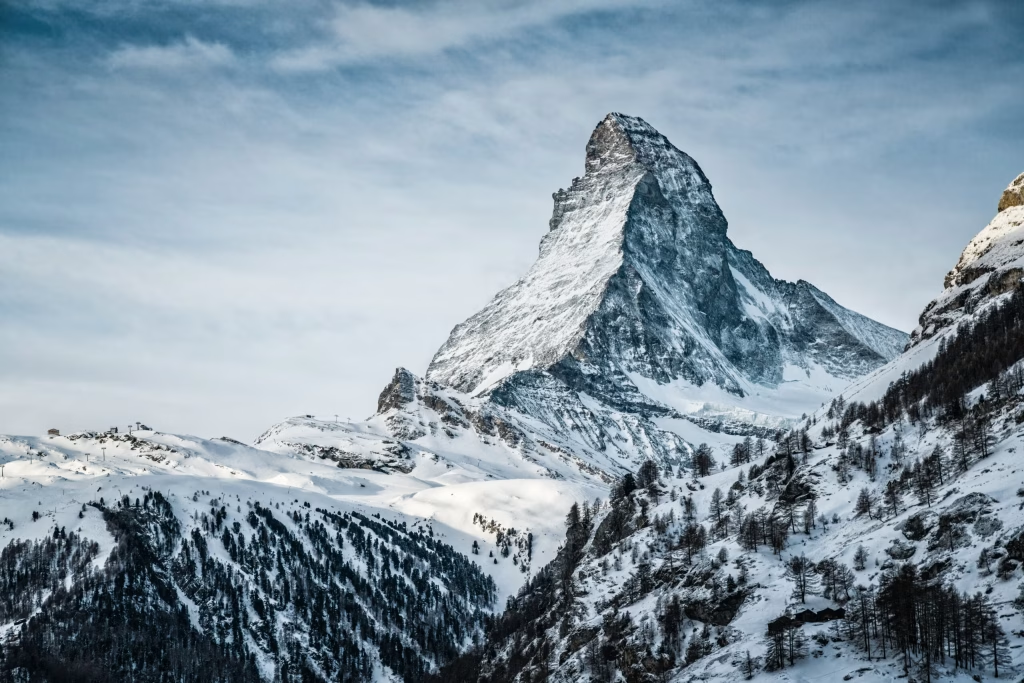
It’s completely natural to build your itinerary around Switzerland’s biggest attractions. After all, places like Jungfraujoch, the Matterhorn, and the Glacier Express have earned their reputation for a reason. But one of the biggest surprises for many travellers is that their favourite memory often isn’t the one they planned months in advance.
Instead, it might be discovering a quiet village like Gandria, where colourful houses overlook Lake Lugano, hiking through the alpine flower trails of Allmendhubel, pausing beside the waterfalls of Faido, or spending an afternoon in Lavaux, watching the vineyards roll down towards the lake. These aren’t always the places that dominate social media, but they’re often the places that leave the deepest impression.
Some of Switzerland’s most memorable experiences happen when you leave room to wander beyond the obvious. That’s where hidden gems reveal the quieter, more authentic side of the country.

Source: SWISS.com
Planning your trip is important, but leaving room for spontaneity can be just as rewarding. If every hour of your holiday is scheduled, there’s little space for unexpected discoveries. Some of Switzerland’s most memorable experiences aren’t ticketed attractions. They’re conversations with locals, peaceful walks through historic towns after the crowds have gone, scenic train rides where you simply enjoy the view, or a detour that wasn’t part of the original plan.
Research your destinations, book the experiences you don’t want to miss, understand the transport system, choose the right season, and pack wisely. Then, once you’re there, slow down and enjoy the journey. Sometimes, the best way to experience Switzerland isn’t by trying to see more, but by taking the time to truly appreciate what’s already in front of you.
Planning Tip: Leave a few hours unscheduled every couple of days. You never know where your favourite memory will come from.
Final Thoughts
Switzerland is one of those rare destinations that manages to exceed expectations.
Not because every mountain is taller or every lake is bluer than the photos you’ve seen online, but because the country has a way of making travel feel effortless once you understand how it works.
A little preparation before you leave home can save you time, money, and unnecessary stress. More importantly, it allows you to focus on what really matters: watching the sunrise over the Alps, wandering through historic streets without a fixed agenda, sharing meals with the people you’re travelling with, and creating memories that last long after you’ve returned home.
If there’s one takeaway from this guide, let it be this:
Don’t try to see all of Switzerland. Instead, give yourself the chance to truly experience the parts you choose.
Travel slowly. Stay curious. Leave room for the unexpected.
Because Switzerland isn’t a destination that’s meant to be rushed. It’s one that’s meant to be experienced.
Quick Switzerland Planning Checklist
Before you pack your bags, here’s a simple checklist to help you plan with confidence:
✔ Choose destinations based on your travel style, not just what’s trending.
✔ Visit during the season that matches the experiences you’re looking for.
✔ Compare transport options before purchasing a travel pass.
✔ Budget for mountain excursions and other major attractions in advance.
✔ Check the weather regularly using MeteoSwiss.
✔ Download the SBB Mobile App and offline maps before travelling.
✔ Pack layers and comfortable walking shoes.
✔ Respect local customs, public spaces, and nature.
✔ Keep your itinerary flexible enough for unexpected discoveries.
✔ Most importantly, slow down and enjoy the journey.
Would you like to join our growing community? Join us here.
To read some of our recent posts, click here
Are you interested in meeting, connecting, and collaborating with Women across Switzerland, check out “With Purpose“.
Would you like to be featured on My Swiss Story? Read this and Apply today!
Get in touch with us: About | Subscribe to our Newsletter
Follow us on Social Media: Instagram | LinkedIn